Faux Guide

2014

In collaboration with Mirjam Linschooten
Installation of plaster sculptures, painted wooden posters, and painted copper table

Faux Guide challenges conventional notions of historic preservation with ephemeral evidence of orality/language and memory. Collaborating with local artisans and with students from Tétouan’s architecture and fine arts academies, we created a series of language-based works which reckoned with the effect of French colonialism on the visual landscape of Morocco. Initiated in the 1920s, the French developed several cultural offices in the country, isolating and codifying artisanal practices to reflect their own notions of “pure Moroccan taste.” Each work uses a traditional Moroccan craft and puts it in dialogue with contemporary written language, creating a hybridized form of cultural expression.
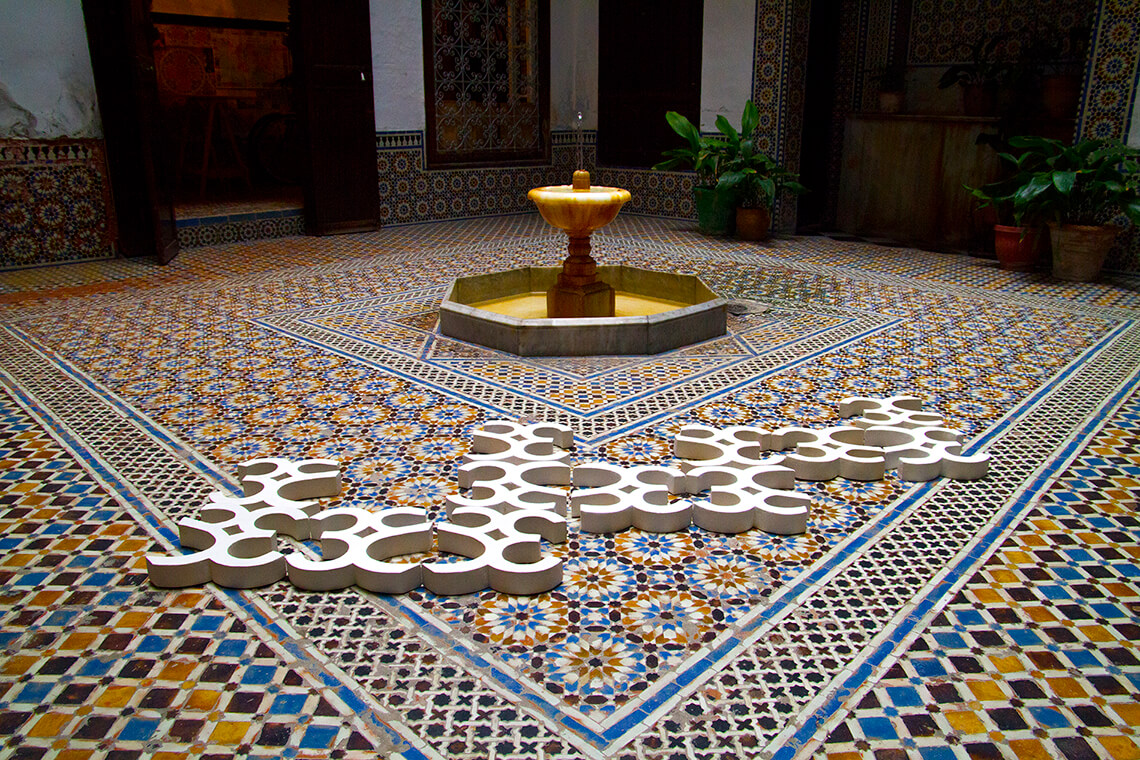
White sculptures lying on a mosaic ground next to a water fountain.
An installation of plaster sculptures mirroring the Arabic ‘Ayin’ with the number 3 (its Arabic chat counterpart).
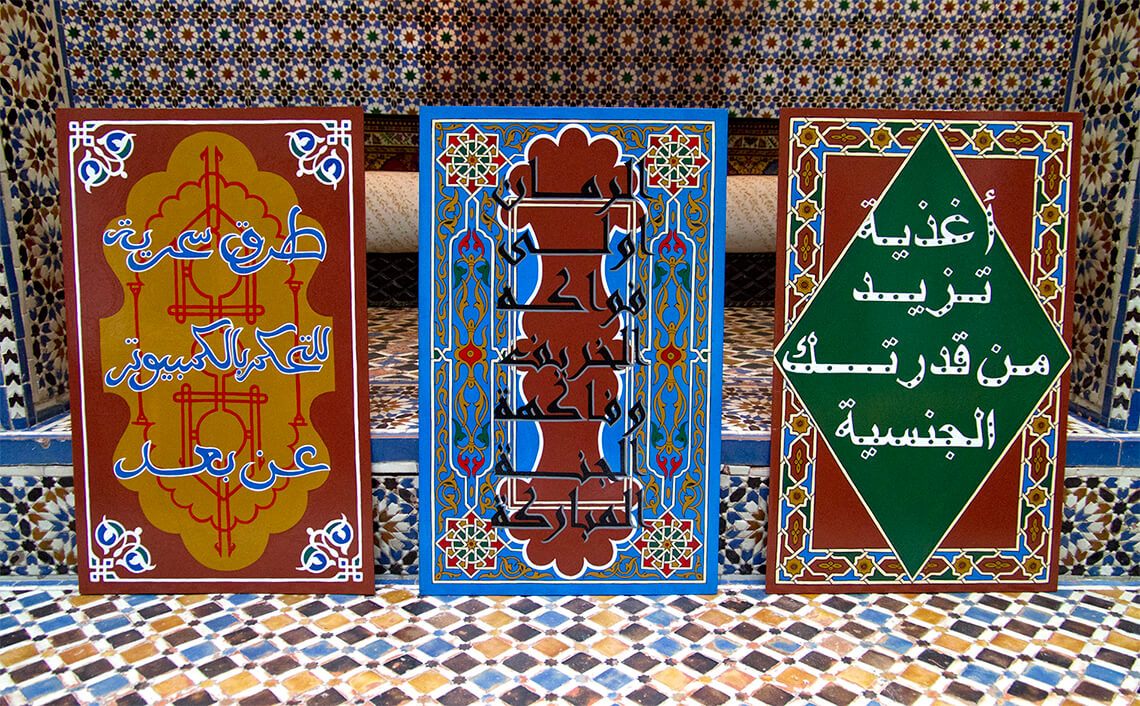
Three posters standing against a mosaic background.
A series of 3 painted wooden posters using headlines from popular Moroccan newspapers: “Magical methods of controlling your computer from a distance”, “The pomegranate, first fruit of autumn and blessed by heaven”, “The foods that will augment your sexual capacities”.
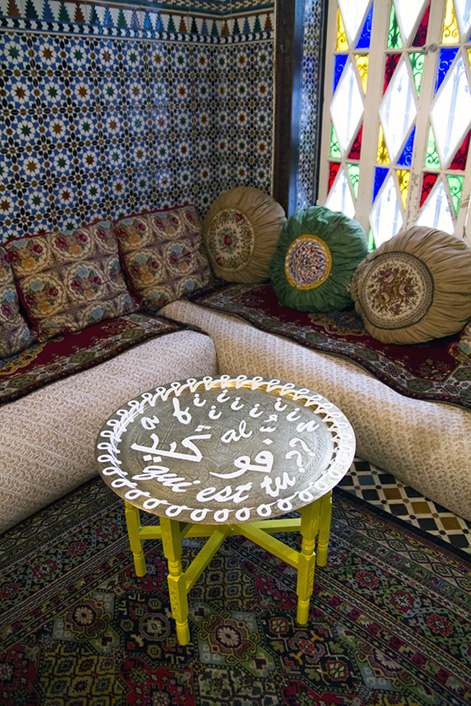
A round coffee table standing on an oriental rug, next to a patterned couch with various pillows against a wall with a repeating pattern and a stain glass window.
A painted copper table with phrases sampled from social media: Hahahahahahaha [Derija in Arabic script] What’s Up [Derija in Latin letters] The faux guide [French in Arabic script] who are you?? [French in Latin letters].
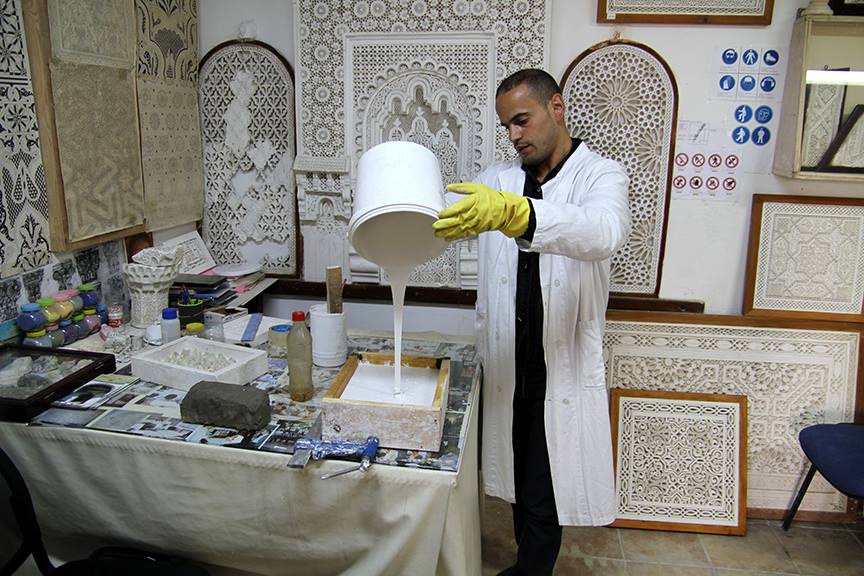
A man in a white lab coat pours white liquid into a mold, with intricate art pieces in the background.
Mr. Roro, a plaster artisan from Dar Sanaa, demonstrates silicone mold making.
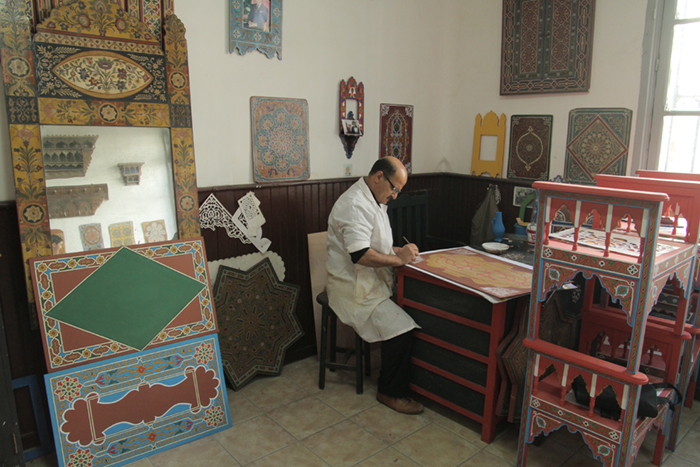
A man sits in a room surrounded by art pieces, while drawing on a new art piece.